1911 Parts Fitting: What Drops In, What Needs a File and What Needs a Gunsmith
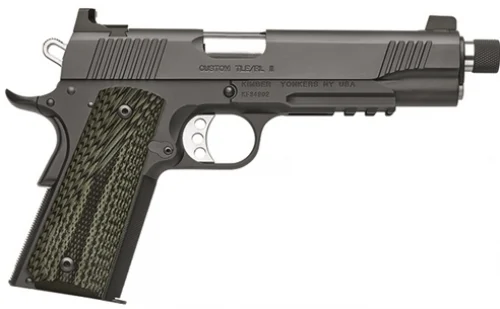
The 1911 is the most rebuildable pistol ever made and the least tolerant of a careless rebuild. Its parts were designed for hand fitting, and a century of makers have held to tolerances that assume a file and a gauge at the end of the line. Some parts drop in on any frame; some need minutes with a stone; some need a gunsmith with fixtures. This guide sorts the common upgrades into those three bins, gives the fitting steps for the middle bin, and lists the safety checks that follow every change.
Drop-in parts
Grips, grip screws and bushings, magazines, recoil springs and guide rods, firing pins and firing-pin springs, mainsprings, plunger tubes on frames already staked for them, and most sights in a matching dovetail install without fitting on any in-spec 1911. Mainspring housings drop in on most frames, with the occasional pin-hole misalignment that a mainspring housing pin will not forgive; buy the housing that matches the frame's profile, arched or flat, government or officer. Magazine catches drop in but their lock screw is a hand fit for a firm click.
Parts that need minor fitting
Thumb safeties almost always need the lug fitted to the sear: install the safety with the hammer cocked, try to move it to safe, and stone the lug in small strokes until it snaps on and holds the sear without the sear moving, then check that it comes off cleanly. Ambidextrous safeties add the right-side lever's fit to the grip. Grip safeties need the beavertail radius to match the frame's tangs and, on oversized parts, the tangs blended; the safety must block the trigger when relaxed and release it fully when depressed. Slide stops are a fit at the pin-to-barrel-link and at the plunger detent; a slide stop that will not lock back or will not release needs the lug adjusted. Extended magazine releases and triggers with adjustable over-travel are fitted with the trigger bow filed for free movement and the over-travel screw set so the hammer still falls. Ejectors and extractors are tensioned by hand.
Parts that need a gunsmith
Barrels and bushings sold as match or gunsmith-fit are oversized at the hood, the lower lugs and the bushing so that they can be fitted for lock-up; that fitting needs fixtures, a lug cutter and experience, and an unfitted match barrel will not go into battery or will batter the frame. Drop-in barrels exist and fit as their name says; buy those unless you are paying a gunsmith. Sear, hammer and disconnector sets are the other case: they can be installed at home, but the sear and hammer hooks are what decide whether the pistol is safe, and a set fitted without a sear fixture and the knowledge to use it is the classic cause of a 1911 that follows or doubles. Have a gunsmith fit the fire-control group, or buy a pre-fitted set from a maker who guarantees the engagement.
Springs
The recoil spring is the tuning part most owners can change safely: sixteen pounds is the government-model standard for ball ammunition, eighteen for hot loads, fourteen for light target loads. Match the spring to the load and the barrel length; a spring too heavy for the load short-strokes and batters the slide stop, too light and the slide batters the frame. Mainsprings alter the hammer's strike and the trigger's feel; do not go below the maker's weight on a carry pistol. Firing-pin springs should be extra-power on any pistol without a firing-pin block. Replace recoil springs every few thousand rounds.
Frame and slide sizes
Parts are sold by frame size and by slide length, and the two are not the same thing. Government, Commander and Officer describe slide and barrel length, five, four and a quarter and three and a half inches; full-size and compact describe the frame, and an Officer-length slide can sit on a full-size frame. Grips, mainspring housings and magazines follow the frame; barrels, bushings, recoil springs and guide rods follow the slide. Nine-millimetre and .45 parts differ in the barrel, the extractor, the ejector, the firing-pin stop and the magazine, and sometimes in the slide's breech face; buy the calibre-specific part for each.
Sights
Most modern 1911s use a Novak-pattern rear dovetail and a front dovetail of a stated width; older Colt and GI pistols have a narrow rear dovetail and a staked front sight, which a gunsmith mills for a dovetail. Buy sights by dovetail pattern, fit them with a sight pusher or a brass drift, and check the height: a sight set that shoots low at twenty-five yards needs a shorter front or a taller rear. Fibre-optic and tritium fronts in a matching dovetail are the most common 1911 upgrade after grips.
The checks after every change
- Thumb safety on, hammer cocked, trigger pressed hard: the hammer must not fall; safety off, it must fall.
- Grip safety relaxed, trigger pressed: no fall; grip safety depressed: fall.
- Hold the trigger back, cycle the slide, release slowly: a click, not a fall.
- Half-cock: pull the hammer back to the half-cock notch, press the trigger: no fall.
- Slide fully forward on a chambered dummy round, hammer cocked, thumb pressure on the hammer: it must not push off.
- Drop the pistol's muzzle onto a padded bench from a few inches, cocked and locked: no fall.
A pistol that fails any check is not safe to load; a pistol that fails the hammer push-off or half-cock test has a sear and hammer problem for a gunsmith.
Florida and the 1911
Parts ship to your door with no check and no wait. A complete 1911 goes to a Florida dealer with the three-day wait unless you are exempt, as the buying guide explains. Browse 1911 parts and 1911 pistols in the catalogue, and the Glock guide if the other pistol on the bench is a polymer one.
General information, not legal advice. Current as of September 2026. Laws change; check the official source before you act.